
Signs of termites are easy to miss, and that’s precisely what makes termites one of the most financially damaging pests a homeowner can face. Unlike a leaking pipe or a failing appliance, termite damage develops slowly and silently, often behind walls, beneath floors, and inside structural members that show no surface indication of what’s happening inside. By the time visible signs appear, an infestation may have been active for months or years, and the structural damage may be far more extensive than the surface evidence suggests. Knowing what the early and intermediate signs of termites look like is one of the most valuable home protection skills a homeowner can develop.
The Most Common Signs of Termites in Residential Homes
Termites produce several distinct types of evidence, and the type that appears depends on the species present and the location of the infestation. Subterranean termites produce different signs than drywood termites. Mud tubes are the most recognizable sign of subterranean termites. These pencil-width tunnels of soil, wood particles, and termite saliva connect the colony in the ground to the wood above, appearing on foundation walls, crawl space piers, and any surface termites need to cross. Breaking a section and checking for live termites days later confirms whether the tube is active.
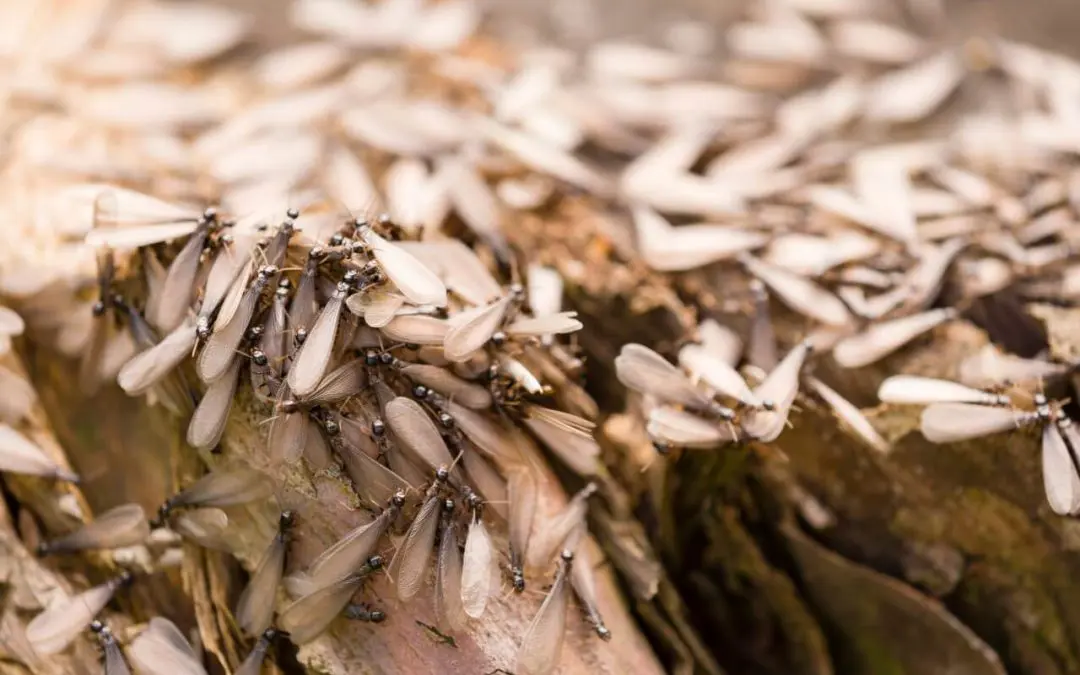
Frass, termite droppings, is the signature sign of drywood termites. Drywood termites push their waste out of small holes in infested wood, where it accumulates in small piles resembling sawdust near the infestation site. Finding frass below a wooden surface, windowsill, or door frame reliably indicates drywood termite activity in the wood above. Swarmer wings are another early sign of termites. Termite swarmers emerge in large numbers during warm months to establish new colonies, then shed their wings shortly after landing. Finding small piles of discarded wings near windowsills or doorways indicates swarmers have been active and a colony may already be established within the structure.
Structural Signs of Termites That Indicate Advanced Damage
The structural signs of termites are the ones that indicate the infestation has been active long enough to cause meaningful damage. Wood that sounds hollow when tapped is one of the most reliable structural signs of termites. Termites consume wood from the inside out, leaving only a thin surface shell. A solid knock on healthy wood produces a dense sound; the same knock on termite-damaged wood produces a hollow resonance. Doors and windows that suddenly become difficult to open may signal termite damage in the surrounding frame, not just seasonal wood movement. Blistering or bubbling paint on wood surfaces may also indicate moisture produced by termite activity beneath the surface, and warrants investigation when it appears without another obvious cause.
The Termite Inspection: What It Covers and Why It Matters
A professional termite inspection, also called a wood-destroying organism (WDO) inspection, is performed by a licensed professional who systematically examines accessible areas of the home for evidence of termites and other wood-destroying insects. The inspector checks the foundation perimeter, crawl space, attic framing, garage, and any wood near soil contact. A termite inspection is required by lenders in many states before mortgage approval and is always worth ordering when purchasing a home. It’s also a valuable periodic step for existing homeowners.
Frequently Asked Questions (FAQs)
How do I tell termites apart from ants?
Termite swarmers are frequently confused with flying ants, but the distinction is straightforward. Termites have straight antennae, a broad waist with no visible narrowing between the thorax and abdomen, and two pairs of wings of equal length. Flying ants have elbowed antennae, a pinched waist, and front wings noticeably longer than the rear wings.
How quickly can termites cause serious damage?
A mature subterranean termite colony of several hundred thousand workers can consume about one linear foot of a 2×4 in approximately five months. This sounds slow, but colonies grow over years, and multiple colonies can infest the same structure simultaneously. Most homeowners discover termite damage that has been developing for two to five years or longer — by which point the damage to framing, subfloor, or structural members can be extensive.
Are there termites in every region of the United States?
Termites are present in every state except Alaska. Subterranean termites are found throughout the continental United States and are most prevalent and active in the South, Southeast, and Southwest, where warm temperatures support year-round activity. Drywood termites are primarily found in coastal Southern states, Hawaii, and the Southwest.
What should I do if I find signs of termites in my home?
Contact a licensed pest control professional as soon as possible; don’t treat the area yourself or disturb visible mud tubes or frass before the inspection. Disturbing the evidence could make it harder for the professional to accurately assess the extent and location of the infestation. The inspector will confirm the species, identify the scope of activity, recommend a treatment approach, and assess any structural damage that warrants repair. Getting multiple treatment quotes from licensed pest control companies is advisable for any significant infestation.
Can I prevent termites from infesting my home?
Eliminating the conditions that attract and support termites significantly reduces risk. Keep wood mulch, firewood, and debris away from direct foundation contact. Maintain adequate crawl space ventilation and address any moisture accumulation beneath the home. Repair roof and plumbing leaks promptly. Ensure that no structural wood is in direct contact with soil, and treat any wood-to-soil contact points. Annual professional termite inspections catch early activity before it becomes established, the most reliable prevention tool available.
American Dream Home Inspections offers professional home inspection services to Rhode Island and South and Central Massachusetts. Contact us to schedule an appointment for our services.