
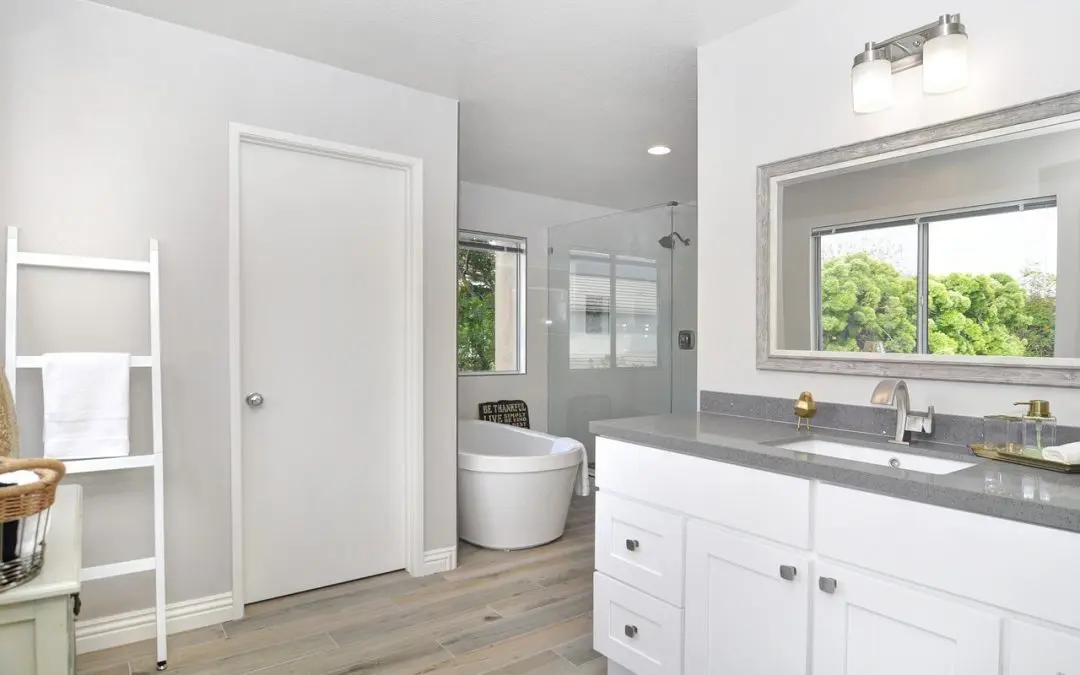
Bathroom lighting is one of the most complained-about elements in residential homes. Poor lighting makes every morning routine harder: applying makeup, grooming, getting an accurate look at what you’re wearing before you walk out the door. The good news is that bathroom lighting improvements are among the most impactful and most achievable upgrades a homeowner can make, often without any major electrical work. A few strategic changes can transform a bathroom from a dim, shadowy space into one that functions exactly as it should.
What Makes Bathroom Lighting So Uniquely Challenging
Bathroom lighting has to do something that lighting in other rooms doesn’t do: illuminate a person’s face evenly and accurately, without the harsh shadows overhead-only lighting creates. A single overhead fixture casts light downward from above, which is exactly the wrong direction for a face. It creates dark circles under the eyes and shadows under the nose and chin that make the face difficult to see clearly. The additional challenge is that bathrooms are small spaces with high moisture, limiting the types of fixtures appropriate near the shower or above the tub. Understanding both the functional requirements and practical constraints of bathroom lighting is what allows you to make improvements that actually solve the problem.
The Most Important Bathroom Lighting Fix
The single most impactful bathroom lighting upgrade is improving the vanity lighting. The ideal approach involves fixtures mounted at the sides of the mirror. Side-mounted sconces placed at face height deliver even, flattering illumination without the harsh shadows that overhead-only vanity bars create. Hollywood-style lighting, a row of exposed globe bulbs running along the top and both sides of the mirror, is the classic approach to even vanity illumination because it surrounds the face with light from multiple angles. Modern versions have moved considerably beyond the dated aesthetic many people associate with the style. If replacing fixtures isn’t practical, upgrading the bulbs in your existing vanity bar makes a meaningful difference. Warm white LEDs in the 2700K to 3000K range change the quality of light significantly, warmer light is more flattering and more pleasant than the harsh blue-white light many homes have by default.
Layered Bathroom Lighting for Function and Atmosphere
A bathroom that relies on a single light source compromises on something regardless of how bright that source is. A recessed ceiling fixture or flush-mount provides ambient light that fills the room generally. The vanity lighting handles face-level illumination. In larger bathrooms, accent lighting, a small recessed fixture over the shower or a low-wattage fixture near the tub, adds depth and makes the room feel more considered. Dimmer switches are a particularly worthwhile addition to bathroom lighting. Bright for morning routines, dimmed for a relaxing bath in the evening.
Choosing the Right Bulbs
Bulb selection has a disproportionate effect on bathroom lighting quality relative to its cost. Color temperature, measured in Kelvins, is the most important variable. The 2700K to 3000K range produces warm, flattering light that reads accurately for color matching and skin tone. Cooler bulbs above 4000K produce clinical, blue-toned light that makes the bathroom feel institutional rather than welcoming. Color Rendering Index (CRI) is also worth considering for bathroom applications. A CRI of 90 or above ensures colors are rendered accurately, which matters when matching clothing or applying makeup. Many LED bulbs designed for bathroom and vanity use advertise high CRI, and the difference is noticeable in daily use.
Frequently Asked Questions (FAQs)
How many lumens do I need for good bathroom lighting?
For a bathroom vanity area, 150 to 200 lumens per square foot is the recommended target. A typical 50-square-foot bathroom would ideally have 7,500 to 10,000 lumens total across all fixtures, though distribution matters as much as total; lumens concentrated at the vanity where they’re most needed produce better results than the same number spread evenly.
Can I install new bathroom lighting myself or do I need an electrician?
Replacing an existing fixture with a new one of the same type is within DIY capability for homeowners comfortable with basic electrical work. Installing new fixtures where no wiring exists, adding circuits, or running new wire through walls requires a licensed electrician. Adding dimmer switches to existing circuits is a moderately skilled DIY task in most cases.
What is the best bathroom lighting fixture for a small bathroom?
In a small bathroom, avoiding a single overhead fixture as the sole light source is the priority. A vanity bar or side sconces at the mirror, combined with a flush-mount for general ambient light, creates better function than any single fixture can provide. Sconces mounted on the sides of the mirror are particularly space-efficient because they serve the most critical function without requiring ceiling space for a separate fixture.
Should bathroom lighting be warm or cool?
For most residential bathrooms, warm to neutral white light in the 2700K to 3000K range is the best choice. This range renders skin tones accurately, creates a flattering atmosphere, and avoids the harsh quality of cooler light temperatures.
American Dream Home Inspections offers professional home inspection services to Rhode Island and South and Central Massachusetts. Contact us to schedule an appointment for our services.

