
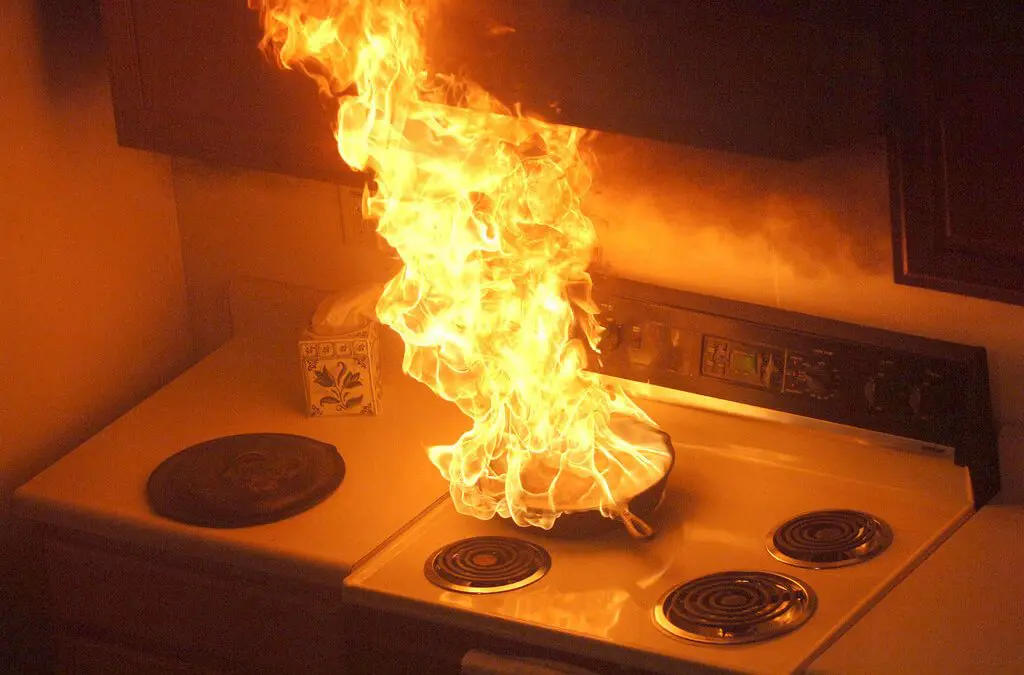
The kitchen is statistically the most accident-prone room in the home, producing more fires, cuts, burns, and falls than any other space. The conditions that cause those incidents aren’t freak occurrences. They’re predictable, preventable, and almost always the result of habits that have become so routine they’ve stopped registering as risks. Kitchen safety is understanding which specific habits produce the most harm so they can be addressed before they do.
Fire Prevention Starts at the Stovetop
The stovetop is the source of the majority of residential kitchen fires. Staying in the kitchen while something is on the stove, turning pot handles inward so they can’t be bumped or grabbed, and keeping the cooking surface free of combustible materials are habits that address the conditions present in most cooking fires. A grease fire is the specific scenario most homeowners aren’t prepared for: adding water to burning grease intensifies the fire dramatically. The correct response is to cover the pan with a lid to smother the flame and turn off the heat. A fire extinguisher rated for kitchen use should be accessible, and every adult in the household should know where it is and how to use it.
The Importance of Knife Safety
Cuts from kitchen knives are among the most frequent kitchen injuries, and the habits that prevent them are the opposite of what most people assume. A sharp knife is significantly safer than a dull one, because a dull knife requires more pressure and is more likely to slip off the surface and into the hand holding it. Cutting away from the body, keeping fingers curled in the claw grip that protects fingertips from the blade, and using a stable cutting board that doesn’t slide are the kitchen safety fundamentals that prevent the majority of knife injuries. Storing knives on a magnetic strip or in a knife block rather than loose in a drawer protects both the blade and the hand reaching past it.
Kitchen Safety Around Hot Surfaces and Liquids
Burns are the most painful and among the most preventable kitchen safety incidents. Using dry oven mitts and ensuring they cover the wrists as well as the hands addresses the most common burn scenario. Keeping children away from the cooking area while the stove is in use prevents the contact burns that happen at the worst moments. Hot liquids represent a specific safety risk that most people underestimate. Carrying hot liquids with two hands, opening microwave containers away from the face to allow steam to escape, and being aware of who is at knee height near a counter with hot liquids all reduce the frequency of the burns that happen in home kitchens every day.
Preventing Slips and Falls, The Kitchen Safety Category Most Skip
The kitchen floor is a fall hazard that most kitchens create. Cleaning up spills immediately rather than stepping around them, using non-slip mats in front of the sink and stove where standing water is most likely, and ensuring adequate lighting so floor conditions are always visible are the kitchen safety measures that address the slip-and-fall category most consistently overlooked.
Frequently Asked Questions (FAQs)
What is the most common cause of kitchen fires?
Unattended cooking is the leading cause of residential kitchen fires by a wide margin. The kitchen safety habit that most directly prevents cooking fires is simply staying in the kitchen while food is actively on the stove.
Should I have a fire extinguisher in the kitchen and what kind?
Yes, a Class K extinguisher for kitchen use, or a multi-purpose ABC extinguisher, should be mounted in a visible, accessible location. Checking the pressure gauge annually confirms it will function when needed. An extinguisher discharged even partially should be professionally recharged before being returned to service.
How do I make kitchen safety work with young children in the house?
Establishing a physical boundary around the cooking area and turning pot handles inward removes the grab-and-pull risk that causes scalding burns. Storing sharp knives and cleaning chemicals in high, latched cabinets rather than lower drawers addresses the access conditions that produce the most serious childhood kitchen injuries. Treating the stove and oven as off-limits zones and establishing that rule consistently before it’s needed is the foundation of kitchen safety for households with young children.
What’s the safest way to handle a grease fire in the kitchen?
Never add water; it causes burning oil to explode outward and dramatically intensifies the fire. The correct kitchen safety response is to slide a metal lid over the pan to cut off oxygen, turn off the burner, and leave the lid in place until the pan has cooled completely. If the fire is too large to safely cover, leave immediately, close the door, and call emergency services from outside.
American Dream Home Inspections offers professional home inspection services to Rhode Island and South and Central Massachusetts. Contact us to schedule an appointment for our services.

